Are brands marketing to humans or to machines?
The agentic shift: from browsers to agents
The defining headline for 2026 is the agentic shift. We are rapidly moving from an era of "humans who browse" to "agents that transact."
This was the central theme debated at a recent CMA Media Council meeting: marketers are no longer just targeting humans. They are increasingly tailoring strategies for autonomous machines acting on behalf of consumers.
This evolution is triggering a cascade of changes. From the collapse of the traditional marketing funnel to the rise of "agentic" systems, several core trends and tensions are shaping the media industry this year.
While 75 per cent of global marketers express excitement about generative AI, the reality is a mix of aggressive innovation, legal gridlock, and a deep philosophical debate about the enduring value of human connection.
The disintermediation of discovery: marketing to the machine
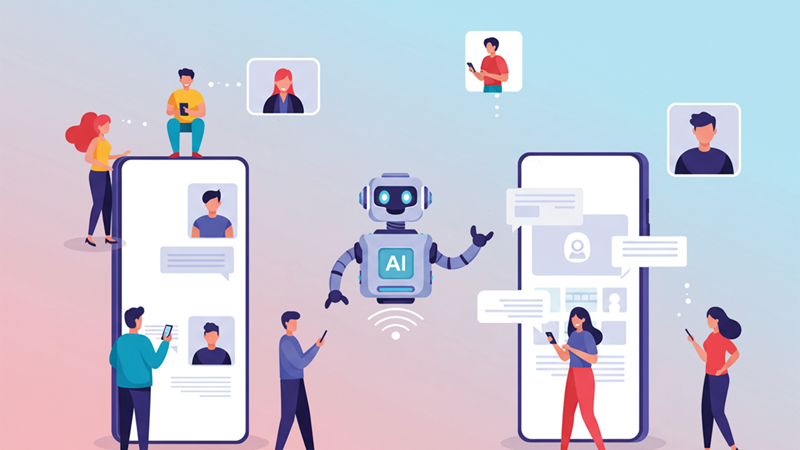
The most disruptive trend for 2026 is the rise of agentic AI – autonomous agents that act as intermediaries between buyers and sellers. In this new reality, consumers will increasingly stop searching for products themselves and instead delegate the task to AI.
This shift creates a significant trust gap. When a consumer asks an AI to "buy the best toaster," the algorithm makes the decision based on data, not necessarily brand sentiment. This forces a strategic pivot from traditional SEO to Generative Engine Optimization (GEO). Search is evolving into Answer Engine Optimization (AEO), where success is measured by "brand citations" and the share of traffic generated by Large Language Models (LLMs). Brands must now ensure their content is machine-readable and prioritized by LLMs.
Does that mean that brand equity becomes a legacy metric? For functional items, some argue that brand loyalty may erode as AI agents shop aggressively for utility and price. However, counter-arguments from members of the Council suggest that humans are not ready to completely outsource their taste. As one expert noted, buying a specific appliance, like a Smeg toaster, is an emotional choice, not just a functional one. While AI can handle logistics, the desire remains human. This points to a bifurcated future: mass-market goods may become the default "utility" choice for bots, while premium brands must double down on emotional connection to ensure the human consumer explicitly requests them.
The implementation reality: crawl, walk, run
Adoption of agentic systems is currently stalled in a "crawl, walk, run" phase. While tech-forward companies are running with full AI integration, many organizations still remain in the "crawl" phase, hamstrung by legal, privacy and procurement teams that are understandably risk-averse.
Marketers want to innovate, but legal teams often block the ingestion of proprietary data into AI models due to security concerns.
Even when tools are available, adoption isn’t guaranteed. There is a fear that "set-and-forget" campaigns erode the strategic value agencies provide. If an AI agent handles buying, targeting and optimization, agencies must redefine their value proposition, moving away from execution and toward high-level strategy and data architecture. Check out the recent blog series from the Media Council on the role of media agencies: Part 1 and Part 2.
Additionally, check out the CMA’s AI playbooks here, which dive further into agentic AI, GEO, and the reality of implementation.
The authenticity paradox: the "human premium"
The acceleration of AI has created an equal and opposite reaction: a craving for the real. As generative AI floods the internet with synthetic content, we’re witnessing impacts on trust.
This creates the authenticity paradox. In a world of infinite, perfect, AI-generated content, "perfection" is no longer a differentiator; it’s a commodity. The new premium is flaws, vibe and human connection.
Consumers are gravitating toward creators and community-led forums because they represent a verifiable human pulse in a synthetic world.
Final thought: meaning over efficiency
The deployment of AI across the industry is inevitable. It will automate the mundane, disrupt search, and rewrite the rules of media buying. However, in an industry where the engine is changing daily, the most sustainable advantage is a workforce that understands how to steer the machine.
The winners in 2026 won’t just be those with the best algorithms. They will be the brands that use AI to handle the logistics of agentic commerce, while reserving their human capital for the one thing machines cannot automate: meaning.
As raised in our Council’s discussions, we must be careful not to trade efficiency for memory. We can market to the machine to get the product in the cart, but we must market to the human to get the brand in the heart.
Authors:
Laure Salmon-Lefranc, Agency Partner, Meta
David Zagury, Director, Paid Media, Neil Patel Digital Canada